
“`html
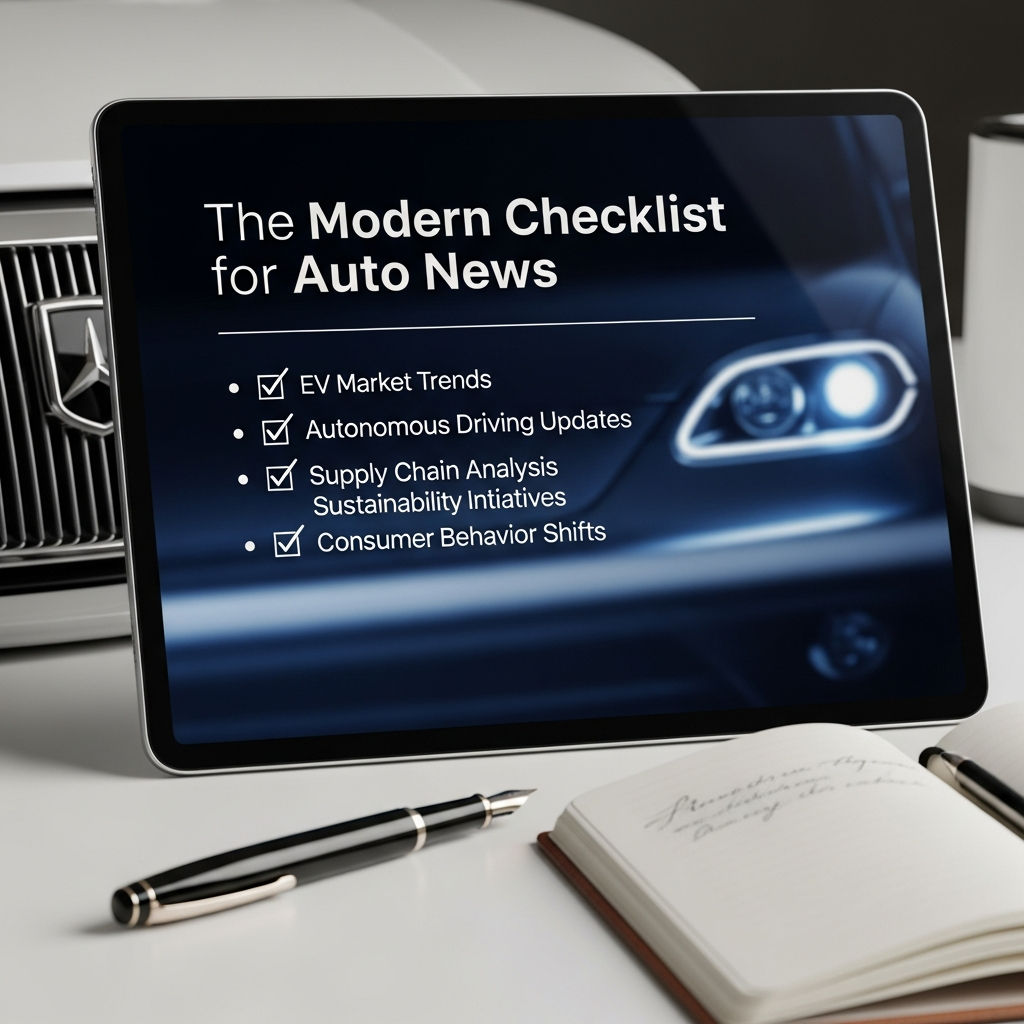
The Evolution of Automotive Journalism: Why a Modern Checklist is Vital
The automotive industry is currently undergoing its most significant transformation since the invention of the assembly line. We are moving away from internal combustion engines (ICE) toward electrification, autonomous driving, and software-defined vehicles. Consequently, the way we consume automotive news must also evolve. Gone are the days when a simple “0 to 60” time and a few glossy photos were enough to satisfy a reader.
In today’s hyper-saturated digital landscape, car buyers, enthusiasts, and industry stakeholders are bombarded with information. To cut through the noise, readers need a framework to identify high-quality, reliable, and comprehensive automotive reporting. This “Modern Checklist for Auto News” serves as a guide for what you should expect from premium automotive journalism in the 2020s and beyond.
1. Technical Depth Beyond the Spec Sheet
Traditional auto news often focused on horsepower, torque, and cargo space. While these remain important, the modern checklist requires a deeper dive into the architecture of the vehicle. High-quality news outlets should now provide insight into:
- Battery Chemistry and Thermal Management: For EVs, it isn’t just about range; it’s about how the battery handles cold weather and its charging curve.
- Software Architecture: As cars become “computers on wheels,” news sources must analyze the operating system, over-the-air (OTA) update capabilities, and cybersecurity measures.
- Advanced Driver Assistance Systems (ADAS): Coverage should go beyond “it has cruise control” to explain the nuances of Lidar vs. Vision-based systems and the safety data behind them.
2. Verification and Source Integrity
The “scoop” culture of the internet often leads to the spread of unverified rumors and “rendered” images that are mistaken for official concepts. A modern auto news checklist must prioritize journalistic integrity. When reading a story, look for:
Primary Source Citations
Does the article cite official press releases, SEC filings, or direct interviews with engineers? Reliable news outlets will distinguish between a confirmed fact and industry speculation. If a story is based on a “leak,” a reputable journalist will provide context and a healthy dose of skepticism.
Correction Transparency
In the fast-paced world of digital publishing, mistakes happen. A hallmark of quality auto news is the willingness to issue clear, dated corrections rather than silently editing a post to hide an error. This builds long-term trust with the audience.
3. Sustainability and Lifecycle Analysis
Modern automotive news cannot ignore the environmental footprint of the industry. The conversation has shifted from “tailpipe emissions” to “total lifecycle impact.” When evaluating a news source, check if they address:
- Supply Chain Ethics: Reporting on where battery minerals like cobalt and lithium are sourced and the labor conditions involved.
- Manufacturing Carbon Footprint: How “green” is the factory producing the car? News outlets should highlight brands utilizing renewable energy in their production lines.
- Recyclability: What happens to the vehicle at the end of its life? Modern reporting looks at battery second-life programs and the use of sustainable interior materials like vegan leather or recycled ocean plastics.
4. Real-World Utility and Consumer Advocacy
A glossy review of a supercar on a closed track is entertaining, but modern auto news must provide value to the everyday consumer. The checklist should include a “Consumer Advocacy” filter that asks the tough questions:
Cost of Ownership vs. MSRP
The sticker price is just the beginning. Quality news should factor in insurance premiums for EVs, the cost of installing home charging stations, and the projected resale value (depreciation) of new technologies.
Infrastructure Realities
If an outlet is reviewing an electric vehicle, they must discuss the current state of public charging infrastructure. A car might be great, but if the charging network is unreliable, the reader needs to know that reality before making a purchase decision.

5. High-Quality Multimedia Integration
Text alone is no longer sufficient for modern auto news. To truly understand a vehicle’s design, interface, and performance, the checklist requires diverse media formats. High-quality news platforms should offer:
- High-Resolution Photo Galleries: Not just the staged manufacturer shots, but detailed “walk-around” photos showing panel gaps, interior textures, and cargo configurations.
- Video Integration: Short-form clips showing the responsiveness of the infotainment screen and long-form videos demonstrating the vehicle’s dynamics on different road surfaces.
- Infographics: Visual data comparing the car against its top three competitors in terms of price, range, and features.
6. Market Trends and Financial Context
Auto news doesn’t exist in a vacuum; it is tied to global economics. A modern checklist ensures that the news source provides context on how a new vehicle launch or a factory closure fits into the larger market. This includes reporting on:
Microchip and Parts Availability
Readers need to know if the car they are reading about is actually available or if it faces a 12-month backlog due to supply chain constraints. This helps manage consumer expectations.
Regulatory Changes
Whether it’s the EPA’s latest emissions standards or the EU’s mandate on internal combustion engine bans, quality automotive journalism explains how government policy dictates what cars will be available in the future.
7. The Rise of the “User Experience” (UX) Focus
In the past, we judged interiors based on the quality of the leather and the number of cup holders. Today, the “Modern Checklist” prioritizes the User Experience. Automotive news should evaluate:
Haptic vs. Physical Controls
Does the car rely too heavily on touchscreens for basic functions like climate control? A good reviewer will critique the ergonomics and safety of the interface design.
Connectivity and Ecosystems
How well does the car integrate with Apple CarPlay, Android Auto, or the user’s smart home? Modern news should report on the “digital friction” a user might experience during daily commutes.
Conclusion: Navigating the Future of Auto News
The “Modern Checklist for Auto News” is about more than just finding out what’s new; it’s about finding out what’s *true* and *useful*. As the industry transitions into a new era of mobility, the demand for high-quality, technically accurate, and ethically minded journalism has never been higher.
By looking for deep technical analysis, source integrity, sustainability reporting, and real-world consumer advocacy, you can ensure that you are making informed decisions—whether you are a casual reader or someone looking to purchase your next vehicle. The cars of the future are complex; the news that covers them should be equally sophisticated.
Quick Summary Checklist for Readers:
- Does the article explain the technology, not just the specs?
- Is there a clear distinction between fact and rumor?
- Does the outlet address the environmental and ethical impact of the vehicle?
- Are there real-world tests regarding charging, range, or software?
- Is the content supported by high-quality, original visuals?
“`